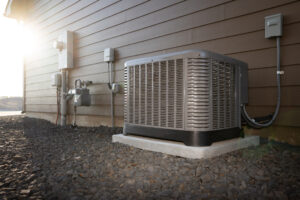
Your outdoor condenser is the hardest-working part of your air conditioning system, and in the Antelope Valley it does that work in some of the harshest conditions around — relentless sun, blowing dust, and triple-digit afternoons. That unit is responsible for releasing the heat your AC pulls out of your home, and when it’s overwhelmed by its surroundings, your entire system loses efficiency. A little attention to the condenser now can mean lower bills and fewer breakdowns through the peak of summer.
Why the Condenser Struggles in Desert Heat
The condenser works by dumping indoor heat into the outdoor air. The hotter and more crowded the air around it gets, the harder that job becomes. When the unit can’t shed heat efficiently, the compressor runs longer, draws more power, and wears out faster. Out here, the desert sun and fine windblown dust make that uphill battle even steeper.
Give It Room to Breathe
Your condenser needs open space on all sides to pull in air and exhaust heat. Over time, plants, fencing, and stored items creep in and choke off that airflow. Take a walk around the unit and check for:
- At least two feet of clearance on every side
- Several feet of open space above the top of the unit
- Overgrown shrubs, weeds, or vines pressing against the cabinet
- Items like trash cans, tools, or patio furniture stacked nearby
Clearing these obstructions is one of the simplest ways to help your system run cooler.
Keep the Coils and Fins Clean
The thin metal fins wrapping the condenser are easy to clog with dust, grass clippings, and cottonwood fluff — all common in the Valley. When they’re packed with debris, the unit can’t release heat properly. You can gently rinse the exterior fins with a garden hose on a low setting, spraying from the inside out and being careful not to bend them. Avoid pressure washers, which can flatten the delicate fins and cause more harm than good.
Should You Add Shade?
A shaded condenser can run more efficiently because it isn’t baking in direct sun all day. If you’d like to add shade, do it the right way:
- Plant a tree or shrub far enough away that it won’t drop debris into the unit or block airflow.
- Use an awning or patio cover positioned well above the unit, never wrapped around it.
- Never cover the condenser itself with a tarp or box while it’s running — that traps heat and starves it of air.
The goal is to block sun without restricting the airflow the unit depends on.
Watch for Warning Signs
A condenser that’s fighting its environment will usually tell you. Keep an eye out for:
- Warm air coming from the vents despite the AC running
- Higher-than-normal energy bills
- A unit that runs constantly without cooling the house
- Unusual buzzing, rattling, or humming from outside
Any of these can point to a condenser that’s overheating, low on refrigerant, or clogged beyond what a rinse can fix.
Stay Ahead of the Heat
Simple seasonal care goes a long way, but the condenser also benefits from a professional once-over to check refrigerant, electrical connections, and coil condition before the worst heat arrives. Protecting this one component helps your whole system last longer and cool better.
If your condenser is struggling in the summer sun, the team at Econo West Heating Air & Plumbing can clean, inspect, and service it so your AC keeps up all season. Call (661) 760-7411 to schedule a visit.