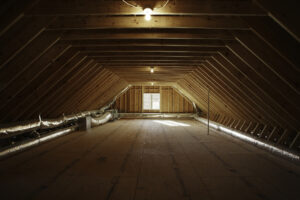
If your air conditioner seems to be running constantly but your home still doesn’t feel as cool as it should, the problem may not be your AC unit at all. In many Antelope Valley homes, the real culprit is sitting directly above the living space: a superheated attic that’s working against your cooling system all day long.
What Is Attic Heat Gain?
Attic heat gain happens when direct summer sun turns your attic into a heat reservoir. In the high desert, attic temperatures can climb well above 150 degrees on a typical August afternoon. That trapped heat doesn’t stay contained — it radiates downward through the ceiling and insulation, pushing warmth into your living space even while your AC is running at full capacity.
Essentially, your air conditioner isn’t just cooling your home. It’s fighting a losing battle against heat pouring in from above.
Why This Matters More in the Antelope Valley
The high desert’s intense, direct sunlight and low humidity create ideal conditions for extreme attic temperatures. Combined with long summer days and minimal cloud cover, Antelope Valley homes are especially prone to significant heat buildup in attic spaces — often more than homes in coastal or milder climates experience.
This means your AC system may be undersized for the actual thermal load it’s facing, even if it was properly sized for the square footage of your home.
Signs Attic Heat Gain Is Affecting Your Home
Several telltale signs point to attic heat as the source of your cooling struggles:
- Upper floors or rooms directly below the attic feel noticeably warmer than the rest of the house
- Your AC runs almost continuously during peak afternoon hours but still can’t reach your set temperature
- Energy bills spike disproportionately during the hottest months
- Ceilings feel warm to the touch in the late afternoon or evening
If these sound familiar, your attic may be undermining your system’s efficiency no matter how well it’s maintained.
How Attic Heat Gain Strains Your AC System
Beyond simple discomfort, constant attic heat gain forces your system to run longer and harder than it was designed to. Over time, this added strain can lead to:
- Increased wear on compressors and fan motors
- Higher energy consumption and utility costs
- Shortened equipment lifespan due to near-continuous operation
- Reduced overall cooling efficiency throughout the home
What Homeowners Can Do
While attic heat gain is a structural issue, there are steps that can reduce its impact on your HVAC system:
- Ensure attic insulation meets recommended levels for your home’s age and construction
- Improve attic ventilation to allow trapped heat to escape rather than radiate downward
- Consider radiant barriers, which reflect heat away before it accumulates
- Schedule a professional HVAC evaluation to determine whether your system is properly matched to your home’s actual cooling demands
Get a Professional Assessment
Attic heat gain is easy to overlook because it’s not something you can see from inside your air ducts or cooling equipment. At Econo West Heating Air & Plumbing, we help Antelope Valley homeowners identify hidden heat sources that are working against their AC systems and recommend practical solutions to restore comfort and efficiency. Call (661) 760-7411 to schedule an inspection and find out what’s really driving up your cooling costs this summer.