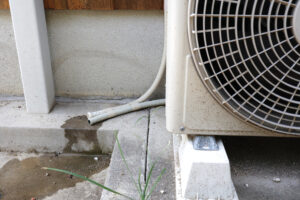
Most people think of their air conditioner as a machine that makes cold air. It also makes water. As warm indoor air passes over the cold evaporator coil, moisture condenses out and drips into a pan, then travels out of your home through a drain line. In July, when your system runs most of the day and monsoon humidity pushes moisture levels higher than usual, that drain line handles far more water than it does the rest of the year. If it’s clogged, you find out fast — usually in the form of a system that won’t turn on or a wet spot in the ceiling.
Why Drain Lines Clog
The drain line is a narrow PVC pipe, and it sits in a dark, consistently damp environment. That combination invites buildup.
Common culprits include:
- Algae and biological slime, which thrive in standing moisture
- Fine desert dust that slips past the filter and settles in the pan
- Rust and debris from an aging drain pan
- Insects or nesting material entering through the outdoor termination point
- Improper slope in the line, causing water to sit rather than drain
Antelope Valley homes deal with an unusual amount of airborne dust, and that dust mixes with condensation to form a sludge that narrows the pipe over time. A line that drained fine in spring can be nearly closed off by mid-summer.
Signs Your Drain Line Is Backing Up
The symptoms show up in different places depending on how your system is configured:
- The AC shuts off and won’t restart, with no obvious cause
- Water pooling around the indoor unit or furnace
- Stains on the ceiling or wall below an attic air handler
- A musty smell coming from the vents when the system runs
- The drain pan holding standing water
- Higher indoor humidity even while the AC runs
Many systems have a float switch that cuts power when the pan fills, which is a safety feature working exactly as intended. It’s frustrating in the moment, but it’s preventing water damage. If your AC shut down suddenly and everything else seems fine, a full drain pan is one of the first things a technician from Econo West Heating Air & Plumbing will check.
Why Attic Installations Raise the Stakes
A lot of Antelope Valley homes have the air handler in the attic. When a drain line backs up in that position, gravity does the rest. Water finds its way into insulation, drywall, and ceilings, and the repair bill has nothing to do with HVAC and everything to do with drywall, paint, and possible mold remediation. This is why a secondary drain pan and a working float switch matter so much in attic setups.
What You Can Do
Some maintenance is homeowner-friendly:
- Locate your drain line’s outdoor termination and check that water is dripping out while the system runs
- Keep the area around the termination point clear of dirt and plant growth
- Change your air filter on schedule to reduce dust reaching the coil
- Watch for water around the indoor unit during heavy-use months
Clearing an actual clog is different. It involves accessing the line, applying vacuum or pressure correctly, and confirming the pan and float switch are functioning. Pouring bleach down the line is a common suggestion online, and it can damage the pan and pipe joints over time.
Don’t Wait for the Shutdown
Drain line service is quick and inexpensive when it’s scheduled. It’s neither of those things when it happens on a 107-degree afternoon with water coming through the ceiling. If your system has shut down unexpectedly, or you’d like the drain line cleared as part of a mid-season checkup, contact Econo West Heating Air & Plumbing at (661) 760-7411.