Southern California is known for its warm, sunny weather—but when temperatures drop on winter nights, homeowners still rely on their heating systems to stay comfortable. Because furnaces don’t run as heavily as in colder climates, many people assume they don’t need regular service.
Unfortunately, that assumption can lead to safety risks, unnecessary breakdowns, and even carbon monoxide exposure. Even if you only use your furnace a few months out of the year, annual safety inspections are an important part of protecting your home and family.
Why “Light Use” Doesn’t Mean “No Maintenance”
Furnaces experience wear and tear every time they cycle on—whether that’s 20 times per day in a snowbelt state or a few nights a week in Southern California. Dust, debris, and minor component wear can still build up over time.
Issues that can develop include:
- Cracked heat exchangers
- Loose electrical connections
- Failed safety switches
- Blocked or damaged flue pipes
- Dirty burners or igniters
You might not notice these problems immediately, but they can impact safety and performance the next time temperatures drop.
The Carbon Monoxide Risk
One of the most important reasons to schedule furnace inspections is the risk of carbon monoxide (CO), a colorless, odorless gas that can be deadly at high concentrations.
A damaged or cracked heat exchanger can allow combustion gases to mix with the air that circulates through your home. Without a professional inspection, this problem can go undetected.
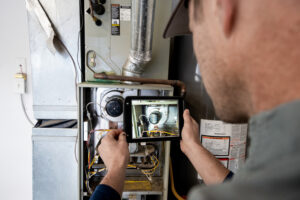
Annual furnace service typically includes:
- Inspecting the heat exchanger for cracks or corrosion
- Checking flue pipes and venting for blockages or leaks
- Verifying proper combustion and draft
- Confirming all safety controls are working correctly
Pairing regular inspections with functional CO detectors provides a strong safety net for your household.
Improved Reliability When You Need Heat Most
There’s nothing worse than turning on the heat during a cold snap and discovering your furnace won’t start. Many common furnace failures—like worn igniters, dirty flame sensors, or blower issues—can be spotted and corrected during routine maintenance.
A professional tune-up can:
- Clean and inspect burners and ignition components
- Lubricate moving parts as needed
- Check air filters and airflow
- Test thermostat communication
- Identify worn parts before they fail
This proactive approach reduces the likelihood of losing heat on a chilly night.
Energy Efficiency Matters Year-Round
Even if you don’t run your furnace very often, an inefficient system wastes energy every time it cycles on. Dirty burners, imbalanced airflow, or failing components can cause your system to use more gas or electricity than necessary.
Annual inspections help your furnace run as efficiently as possible, which:
- Keeps utility costs lower
- Reduces wear on components
- Supports consistent, even heating
It’s an easy way to save money while improving comfort.
When to Schedule a Furnace Safety Check
The best time to schedule a furnace inspection is in the fall, before temperatures begin to drop. That way, any needed repairs can be completed in advance of peak demand.
However, if it’s been more than a year since your last service—or you’ve noticed odd smells, noises, or performance issues—it’s wise to schedule an inspection as soon as possible, regardless of the season.
Give Your Furnace a Safety Checkup
Even in Southern California, heating safety shouldn’t be an afterthought. A simple annual visit from a qualified technician can bring peace of mind, better efficiency, and more reliable comfort all winter long.
If you haven’t had your furnace inspected recently, now is the perfect time to schedule a professional safety check.